
THE TRAILS
THE TRAILS
OF STONE
OF STONE
The landscape and its paths
The nature surrounding Villa Faraldi is an integral part of the village's identity. Among hills, olive groves, and Mediterranean woods develops a network of trails and paths that have connected villages, countryside, and scenic ridges for centuries. Ancient mule paths, once traversed by farmers, shepherds, and merchants, now invite a slow and mindful exploration of the territory.
The trails cross authentic landscapes, offering glimpses of the Steria Valley and, in some stretches, openings towards the sea. The routes are suitable for different levels of experience and allow for immersion in a silent environment rich in biodiversity, where nature and history coexist in balance. Walking in Villa Faraldi means rediscovering the value of time, the landscape, and the profound relationship between man and the land.

The landscape and its paths
The nature surrounding Villa Faraldi is an integral part of the village's identity. Among hills, olive groves, and Mediterranean woods develops a network of trails and paths that have connected villages, countryside, and scenic ridges for centuries. Ancient mule paths, once traversed by farmers, shepherds, and merchants, now invite a slow and mindful exploration of the territory.
The trails cross authentic landscapes, offering glimpses of the Steria Valley and, in some stretches, openings towards the sea. The routes are suitable for different levels of experience and allow for immersion in a silent environment rich in biodiversity, where nature and history coexist in balance. Walking in Villa Faraldi means rediscovering the value of time, the landscape, and the profound relationship between man and the land.
A
Ring of the ponds

Deglio Faraldi

3 km

180 m

F

01:15
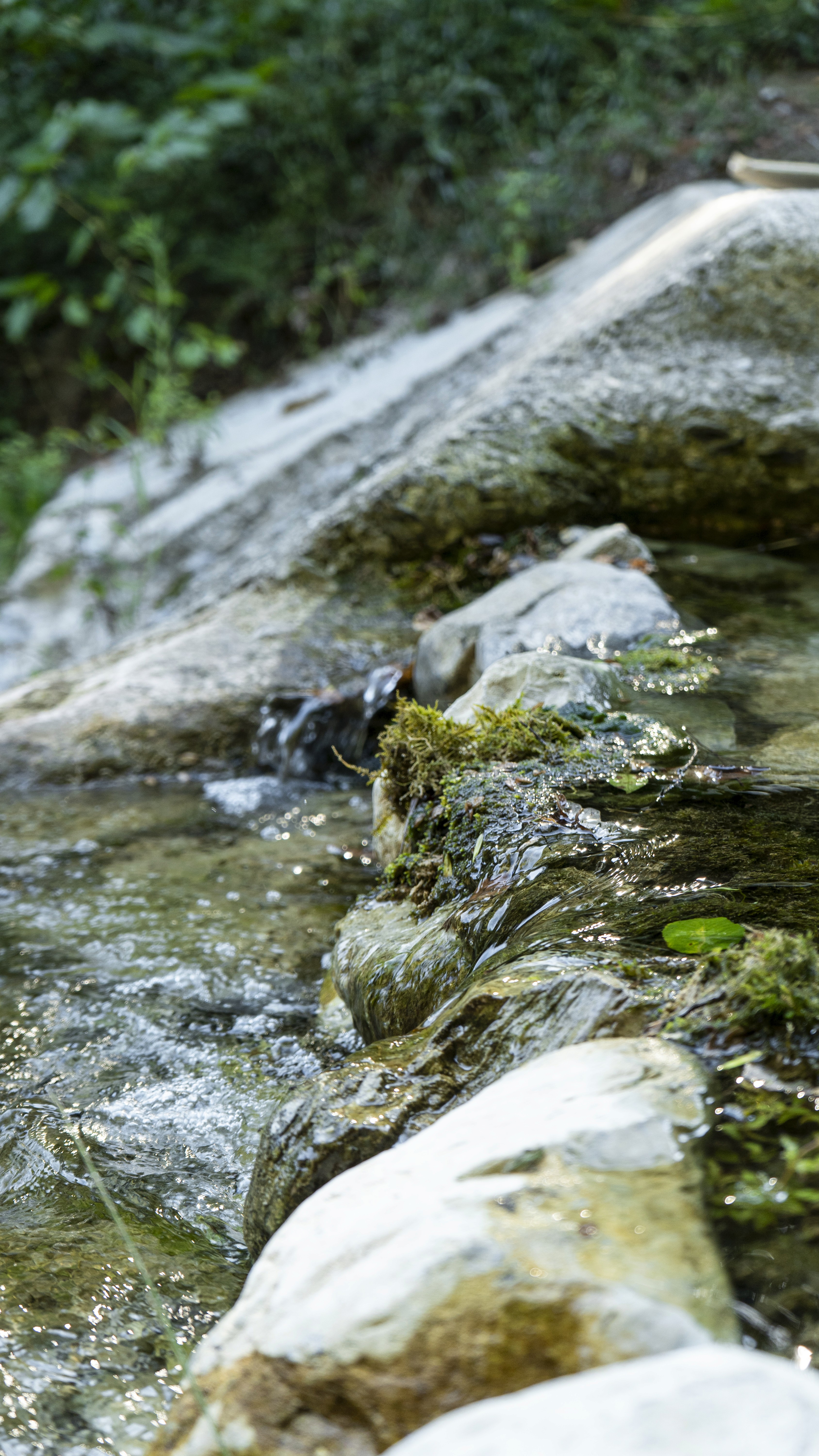
From Deglio Faraldi begins a beautiful circular walk that immerses you in all the natural beauty of the Steria Valley. The visit to the Church of San Bernardo is interesting, a 17th-century building built on the medieval foundations of the ancient parish, which has played an extremely important role over the ages in the distribution of water, a precious resource for the functioning of the mills and for agriculture. From the village, the path leads to the Cervo Stream, used for centuries as a source of energy for the mills and gumbi (oil mills); today, its ponds offer coolness to tourists and visitors on hot summer days. The first of these is the Mill Pond, where several water mills once overlooked, converted in the 18th and 19th centuries into more profitable oil mills. Following the watercourse for a short stretch, one continues on a gentle slope until reaching a tributary of the Cervo Stream, the Ausebecco River. The itinerary continues downhill to the Pian Doddo area where the Steria Stream is crossed, to arrive at the picturesque Serpente Pond. The walk continues along the mule track that leads to the provincial road, and once on it, the loop concludes at Deglio Faraldi.
A
Ring of the ponds
Deglio Faraldi
3 km
180 m
F
01:15
From Deglio Faraldi begins a beautiful circular walk that immerses you in all the natural beauty of the Steria Valley. The visit to the Church of San Bernardo is interesting, a 17th-century building built on the medieval foundations of the ancient parish, which has played an extremely important role over the ages in the distribution of water, a precious resource for the functioning of the mills and for agriculture. From the village, the path leads to the Cervo Stream, used for centuries as a source of energy for the mills and gumbi (oil mills); today, its ponds offer coolness to tourists and visitors on hot summer days. The first of these is the Mill Pond, where several water mills once overlooked, converted in the 18th and 19th centuries into more profitable oil mills. Following the watercourse for a short stretch, one continues on a gentle slope until reaching a tributary of the Cervo Stream, the Ausebecco River. The itinerary continues downhill to the Pian Doddo area where the Steria Stream is crossed, to arrive at the picturesque Serpente Pond. The walk continues along the mule track that leads to the provincial road, and once on it, the loop concludes at Deglio Faraldi.
A
Ring of the ponds
Deglio Faraldi
3 km
180 m
F
01:15
From Deglio Faraldi begins a beautiful circular walk that immerses you in all the natural beauty of the Steria Valley. The visit to the Church of San Bernardo is interesting, a 17th-century building built on the medieval foundations of the ancient parish, which has played an extremely important role over the ages in the distribution of water, a precious resource for the functioning of the mills and for agriculture. From the village, the path leads to the Cervo Stream, used for centuries as a source of energy for the mills and gumbi (oil mills); today, its ponds offer coolness to tourists and visitors on hot summer days. The first of these is the Mill Pond, where several water mills once overlooked, converted in the 18th and 19th centuries into more profitable oil mills. Following the watercourse for a short stretch, one continues on a gentle slope until reaching a tributary of the Cervo Stream, the Ausebecco River. The itinerary continues downhill to the Pian Doddo area where the Steria Stream is crossed, to arrive at the picturesque Serpente Pond. The walk continues along the mule track that leads to the provincial road, and once on it, the loop concludes at Deglio Faraldi.
B
Between Saints and Oratories
Tovetto
3.2 km
217 m
F
01:15
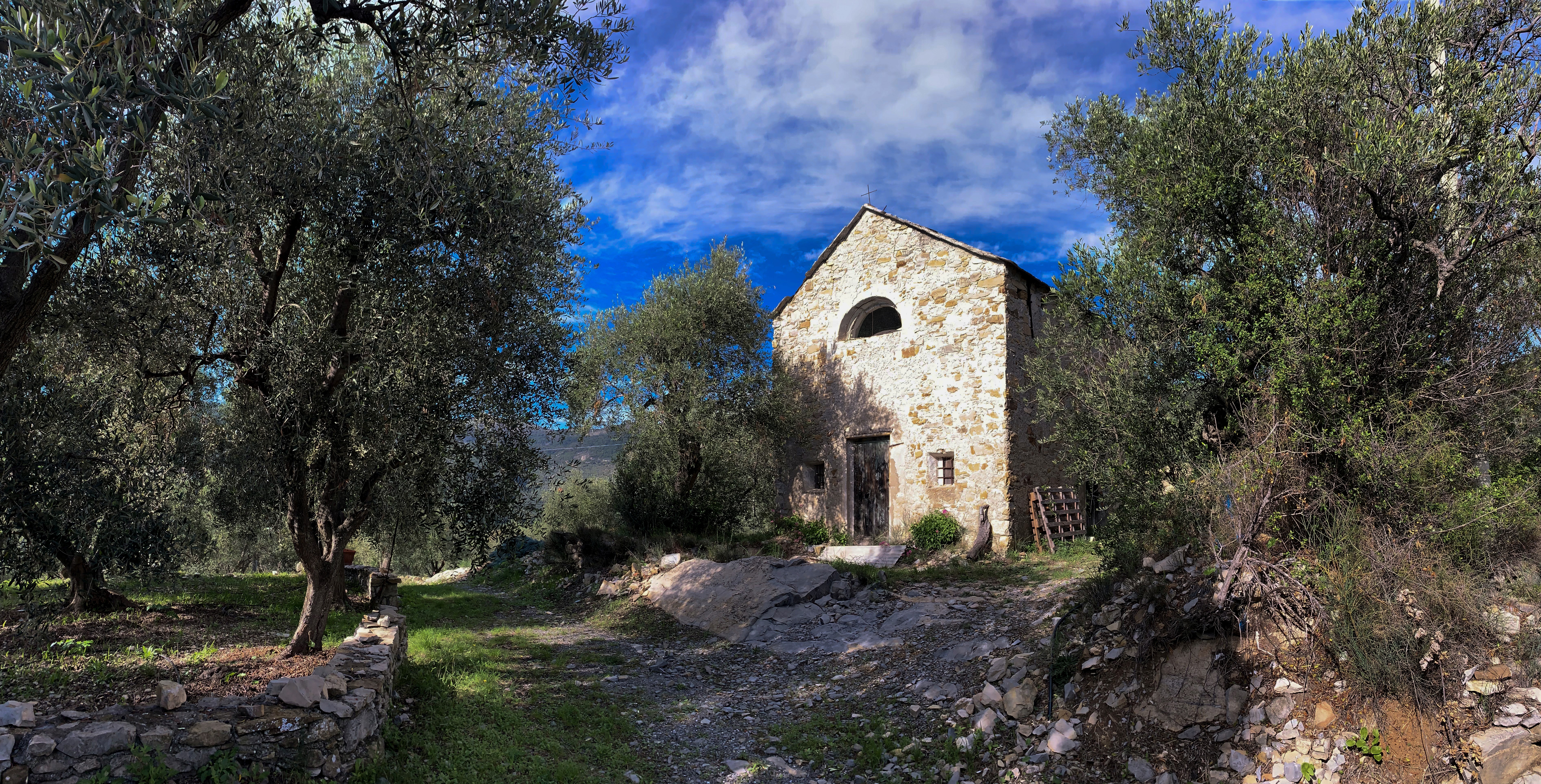
The fervor of the faith of the inhabitants of the Steria Valley is clearly evident in the churches and chapels they have built and preserved over the centuries. During the easy walk, you will come across these places of worship that still retain all their spiritual charm. The itinerary starts from the hamlet of Tovetto, where you find the church of San Sebastiano (16th century), and continues down towards the valley until the pillar known as Santo do Causetta. Continuing down, you cross the Tovo stream which was once used to power the water gumbi that can still be observed along the way. In addition, the characteristic small buildings are also present, which were once used as shelters by farmers and shepherds. The route continues uphill, leading first to the oratory of Madonna della Lea sottana (lower) and then to that of Lea soprana (upper): the former, built in the 17th century, became a warehouse in the 20th century, while the latter was renovated during the 20th century as an art workshop. Upon arriving at Villa Faraldi, you enter the village, where you can visit the church of San Lorenzo, the most important building in the Steria Valley, as well as a small great treasure that holds artifacts and frescoes of invaluable worth. Also of interest is the oratory of Santa Caterina, active from 1580 until 1980, when it became the art studio of the famous Norwegian artist Fritz Røed, and is still used as an art workshop.
B
Between Saints and Oratories
Tovetto
3.2 km
217 m
F
01:15
The fervor of the faith of the inhabitants of the Steria Valley is clearly evident in the churches and chapels they have built and preserved over the centuries. During the easy walk, you will come across these places of worship that still retain all their spiritual charm. The itinerary starts from the hamlet of Tovetto, where you find the church of San Sebastiano (16th century), and continues down towards the valley until the pillar known as Santo do Causetta. Continuing down, you cross the Tovo stream which was once used to power the water gumbi that can still be observed along the way. In addition, the characteristic small buildings are also present, which were once used as shelters by farmers and shepherds. The route continues uphill, leading first to the oratory of Madonna della Lea sottana (lower) and then to that of Lea soprana (upper): the former, built in the 17th century, became a warehouse in the 20th century, while the latter was renovated during the 20th century as an art workshop. Upon arriving at Villa Faraldi, you enter the village, where you can visit the church of San Lorenzo, the most important building in the Steria Valley, as well as a small great treasure that holds artifacts and frescoes of invaluable worth. Also of interest is the oratory of Santa Caterina, active from 1580 until 1980, when it became the art studio of the famous Norwegian artist Fritz Røed, and is still used as an art workshop.
C
Trench Street
I find Faraldi
4.7 km
220 m
F
01:40
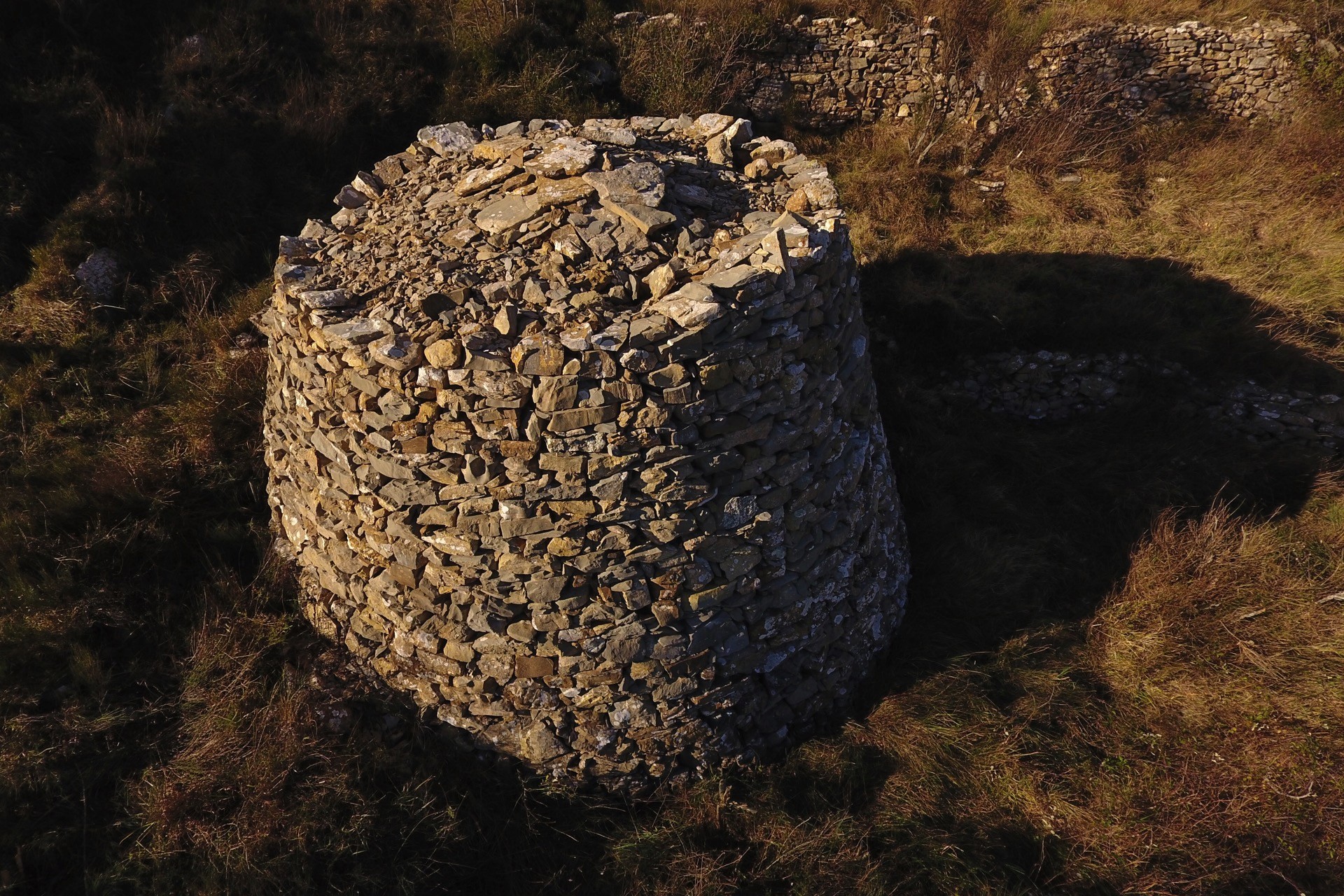
From Tovo Faraldi, a journey begins to discover an ancient mystery passed down orally through generations. After visiting the village, with its oil museum called U Gumbu de Nuccio, the church of Sant'Antonio Abate, dating back to the 1500s, and the oratory of Santa Caterina, built in 1578, one takes the path that climbs up the hills. At the end of the climb, one encounters the ruins of the chapel of San Sebastiano, and then, taking the right fork, the effort is rewarded with breathtaking views. In correspondence with Monte Lago, here are the mysterious Napoleonic trenches, so called by the local population: it is a strip of stone shards about 100 meters long, with a width ranging from 3 to 7 meters, within which a series of ditches and dry stone walls can be found. Even today, the true reason for their construction is unknown: a mystery even for experts, as there are no similar structures in the nearby areas. The journey continues to Monte Chiappa (541 m above sea level) and one begins to descend to complete the loop of the route; as soon as you enter the village of Tovo Faraldi, you can visit the chapel of Saints Cosmas and Damian, from the 17th century, and the ancient and evocative Roman fountain.
C
Trench Street
I find Faraldi
4.7 km
220 m
F
01:40
From Tovo Faraldi, a journey begins to discover an ancient mystery passed down orally through generations. After visiting the village, with its oil museum called U Gumbu de Nuccio, the church of Sant'Antonio Abate, dating back to the 1500s, and the oratory of Santa Caterina, built in 1578, one takes the path that climbs up the hills. At the end of the climb, one encounters the ruins of the chapel of San Sebastiano, and then, taking the right fork, the effort is rewarded with breathtaking views. In correspondence with Monte Lago, here are the mysterious Napoleonic trenches, so called by the local population: it is a strip of stone shards about 100 meters long, with a width ranging from 3 to 7 meters, within which a series of ditches and dry stone walls can be found. Even today, the true reason for their construction is unknown: a mystery even for experts, as there are no similar structures in the nearby areas. The journey continues to Monte Chiappa (541 m above sea level) and one begins to descend to complete the loop of the route; as soon as you enter the village of Tovo Faraldi, you can visit the chapel of Saints Cosmas and Damian, from the 17th century, and the ancient and evocative Roman fountain.
C
Trench Street
I find Faraldi
4.7 km
220 m
F
01:40
From Tovo Faraldi, a journey begins to discover an ancient mystery passed down orally through generations. After visiting the village, with its oil museum called U Gumbu de Nuccio, the church of Sant'Antonio Abate, dating back to the 1500s, and the oratory of Santa Caterina, built in 1578, one takes the path that climbs up the hills. At the end of the climb, one encounters the ruins of the chapel of San Sebastiano, and then, taking the right fork, the effort is rewarded with breathtaking views. In correspondence with Monte Lago, here are the mysterious Napoleonic trenches, so called by the local population: it is a strip of stone shards about 100 meters long, with a width ranging from 3 to 7 meters, within which a series of ditches and dry stone walls can be found. Even today, the true reason for their construction is unknown: a mystery even for experts, as there are no similar structures in the nearby areas. The journey continues to Monte Chiappa (541 m above sea level) and one begins to descend to complete the loop of the route; as soon as you enter the village of Tovo Faraldi, you can visit the chapel of Saints Cosmas and Damian, from the 17th century, and the ancient and evocative Roman fountain.
D
Transhumance Road
Villa Faraldi
6 km
300 m
M
02:15
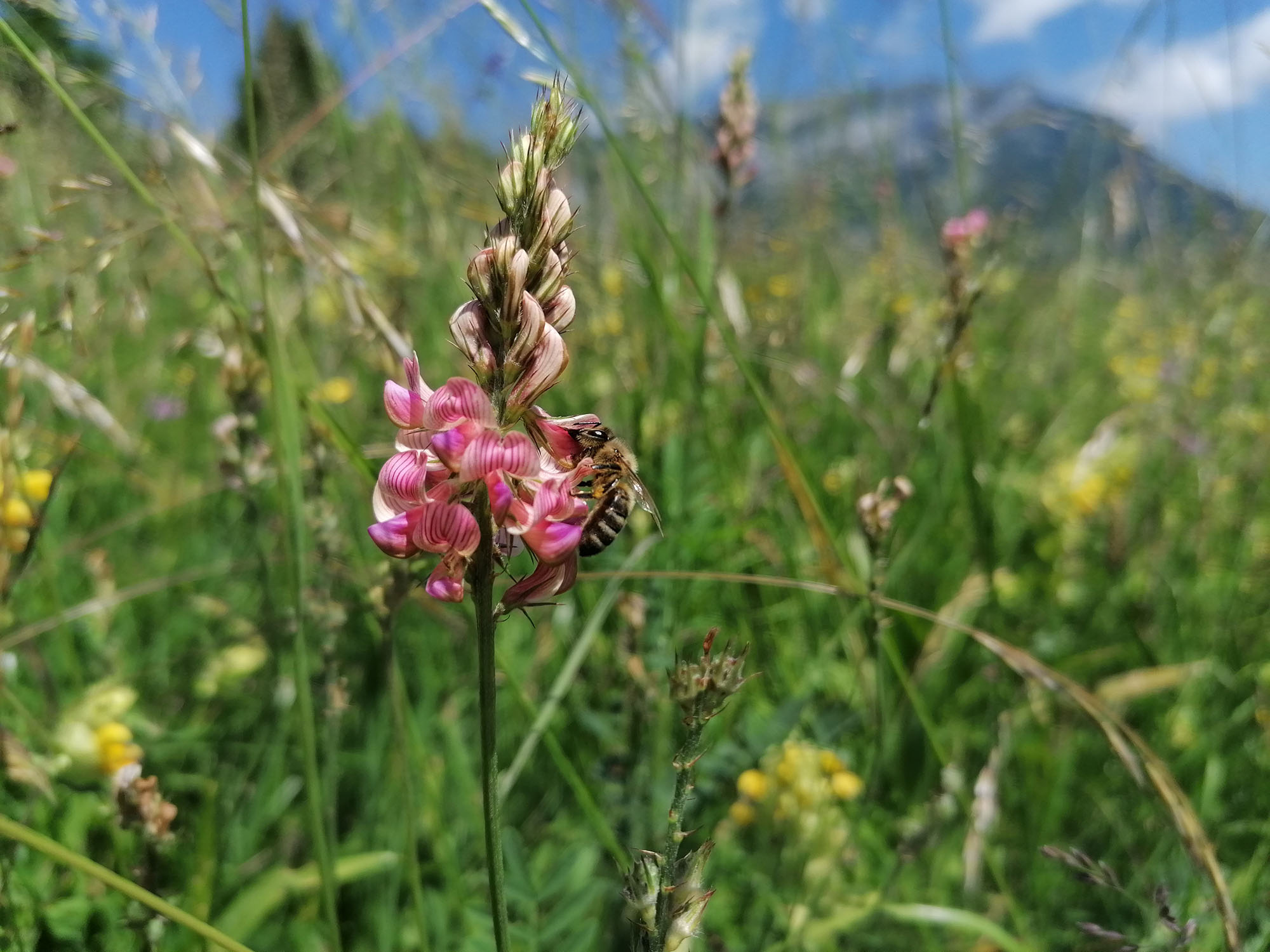
Since ancient times, already in the Neolithic period, shepherds practiced transhumance: the seasonal migration of livestock to areas with more favorable climatic conditions, capable of ensuring better forage. This itinerary will make the visitor relive the ancient paths that led to the pasture: on these trails, one can still breathe the toil of the shepherds and the animals, well rewarded by the lush pastures. The journey starts from the village of Villa Faraldi towards Pizzo Aguzzo. About halfway up, like the shepherds of old, one can stop to catch their breath in front of the chapel of San Bernardo, built in the mid-17th century and later used as a shelter for livestock after the steep ascent. Upon reaching the summit of the trail, one continues to the right towards Monte Bandia (565 m above sea level). From here, the green of the Steria Valley seems to plunge into the blue of the sea. The numerous native spontaneous plants, particularly orchids, along with rare and endangered animal species, such as the ocellated lizard and the buzzard, accompany hikers along the route. Upon reaching the chapel of San Sebastiano, one takes the mule path that leads to Tovo Faraldi, and from there continues to the hamlet of Tovetto; among the vegetation, one can glimpse the caselle, or buildings closely related to agropastoral activities that provided shelter for the shepherds. The evocative loop of transhumance concludes at Villa Faraldi and, as Gabriele D’Annunzio would say: 'Let’s go. It’s time to migrate.'
D
Transhumance Road
Villa Faraldi
6 km
300 m
M
02:15
Since ancient times, already in the Neolithic period, shepherds practiced transhumance: the seasonal migration of livestock to areas with more favorable climatic conditions, capable of ensuring better forage. This itinerary will make the visitor relive the ancient paths that led to the pasture: on these trails, one can still breathe the toil of the shepherds and the animals, well rewarded by the lush pastures. The journey starts from the village of Villa Faraldi towards Pizzo Aguzzo. About halfway up, like the shepherds of old, one can stop to catch their breath in front of the chapel of San Bernardo, built in the mid-17th century and later used as a shelter for livestock after the steep ascent. Upon reaching the summit of the trail, one continues to the right towards Monte Bandia (565 m above sea level). From here, the green of the Steria Valley seems to plunge into the blue of the sea. The numerous native spontaneous plants, particularly orchids, along with rare and endangered animal species, such as the ocellated lizard and the buzzard, accompany hikers along the route. Upon reaching the chapel of San Sebastiano, one takes the mule path that leads to Tovo Faraldi, and from there continues to the hamlet of Tovetto; among the vegetation, one can glimpse the caselle, or buildings closely related to agropastoral activities that provided shelter for the shepherds. The evocative loop of transhumance concludes at Villa Faraldi and, as Gabriele D’Annunzio would say: 'Let’s go. It’s time to migrate.'
D
Transhumance Road
Villa Faraldi
6 km
300 m
M
02:15
Since ancient times, already in the Neolithic period, shepherds practiced transhumance: the seasonal migration of livestock to areas with more favorable climatic conditions, capable of ensuring better forage. This itinerary will make the visitor relive the ancient paths that led to the pasture: on these trails, one can still breathe the toil of the shepherds and the animals, well rewarded by the lush pastures. The journey starts from the village of Villa Faraldi towards Pizzo Aguzzo. About halfway up, like the shepherds of old, one can stop to catch their breath in front of the chapel of San Bernardo, built in the mid-17th century and later used as a shelter for livestock after the steep ascent. Upon reaching the summit of the trail, one continues to the right towards Monte Bandia (565 m above sea level). From here, the green of the Steria Valley seems to plunge into the blue of the sea. The numerous native spontaneous plants, particularly orchids, along with rare and endangered animal species, such as the ocellated lizard and the buzzard, accompany hikers along the route. Upon reaching the chapel of San Sebastiano, one takes the mule path that leads to Tovo Faraldi, and from there continues to the hamlet of Tovetto; among the vegetation, one can glimpse the caselle, or buildings closely related to agropastoral activities that provided shelter for the shepherds. The evocative loop of transhumance concludes at Villa Faraldi and, as Gabriele D’Annunzio would say: 'Let’s go. It’s time to migrate.'
E
Mount Mezzogiorno
Deglio Faraldi
10 km
485 m
M
03:40
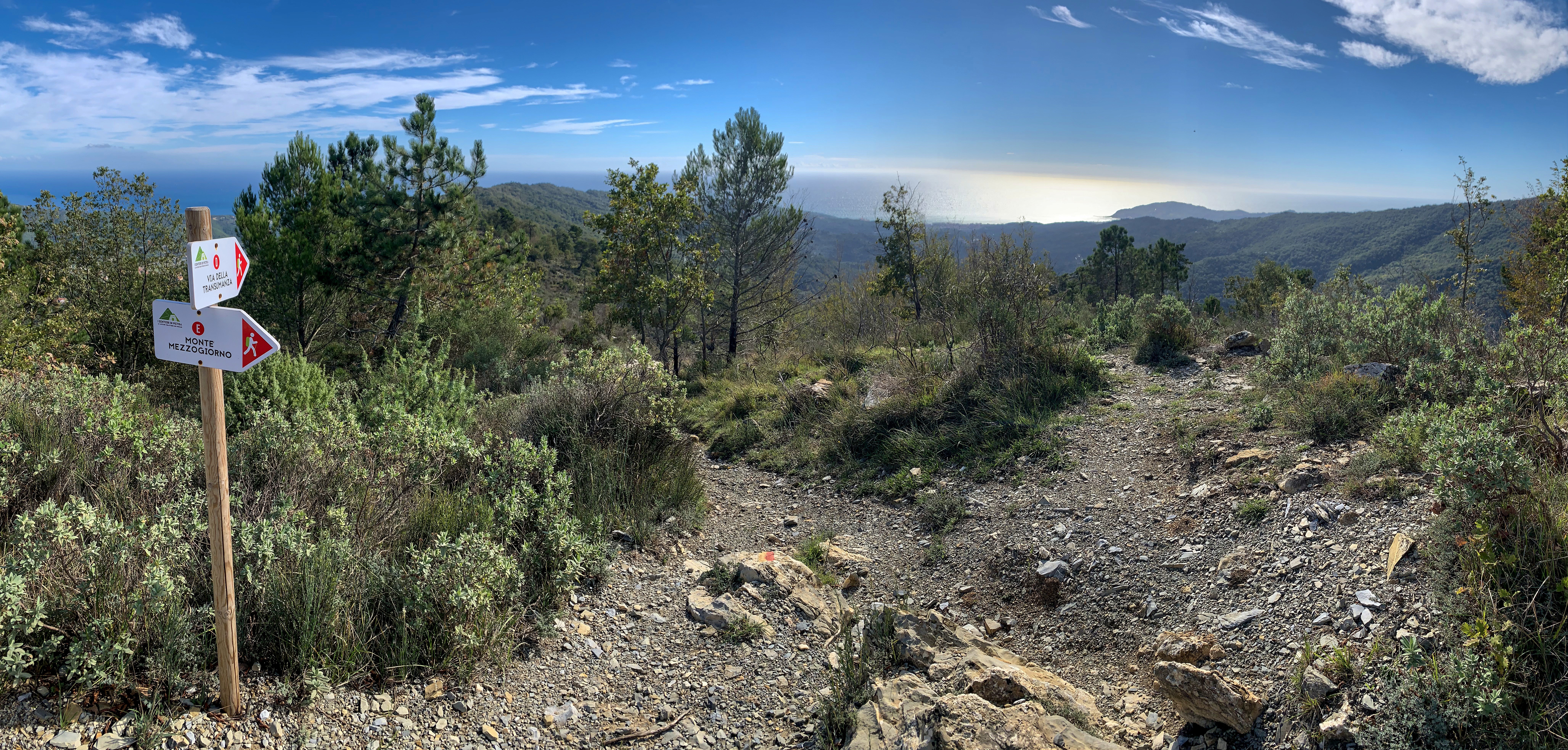
From the village of Deglio Faraldi, a green trail begins that winds through the gentle hills of the valley. After visiting the church of San Bernardo, built in the 18th century and which, as a parish, has played a very important role over the centuries in managing the water of the valley, you take the path that climbs uphill towards Monte Mezzogiorno (767 m a.s.l.). Along the way, you can observe the typical caselle, dry-stone constructions with a characteristic dome shape, where farmers and shepherds found shelter from the elements, even in locations far from inhabited centers. The entire route serves as a panoramic balcony from which you can admire the surrounding valleys and, on clearer days, even the coasts of Corsica. The visitor is completely immersed in nature, surrounded by scents, sounds, and colors. With a bit of luck, it is possible to encounter protected animal species that live in these areas, such as the ocellated lizard and the buzzard, while numerous and colorful wild orchids dot the meadows. The path remains along the ridge up to Monte Aguzzo, where just beyond begins the descent that leads to Villa Faraldi. Along the mule track, you can see the ruins of San Bernardo. After visiting the village, you take the path that crosses the woods and olive groves to return to Deglio Faraldi.
E
Mount Mezzogiorno
Deglio Faraldi
10 km
485 m
M
03:40
From the village of Deglio Faraldi, a green trail begins that winds through the gentle hills of the valley. After visiting the church of San Bernardo, built in the 18th century and which, as a parish, has played a very important role over the centuries in managing the water of the valley, you take the path that climbs uphill towards Monte Mezzogiorno (767 m a.s.l.). Along the way, you can observe the typical caselle, dry-stone constructions with a characteristic dome shape, where farmers and shepherds found shelter from the elements, even in locations far from inhabited centers. The entire route serves as a panoramic balcony from which you can admire the surrounding valleys and, on clearer days, even the coasts of Corsica. The visitor is completely immersed in nature, surrounded by scents, sounds, and colors. With a bit of luck, it is possible to encounter protected animal species that live in these areas, such as the ocellated lizard and the buzzard, while numerous and colorful wild orchids dot the meadows. The path remains along the ridge up to Monte Aguzzo, where just beyond begins the descent that leads to Villa Faraldi. Along the mule track, you can see the ruins of San Bernardo. After visiting the village, you take the path that crosses the woods and olive groves to return to Deglio Faraldi.
F
Sant'Antunin path
I find Faraldi
1.2 km
128 m
F
00:40
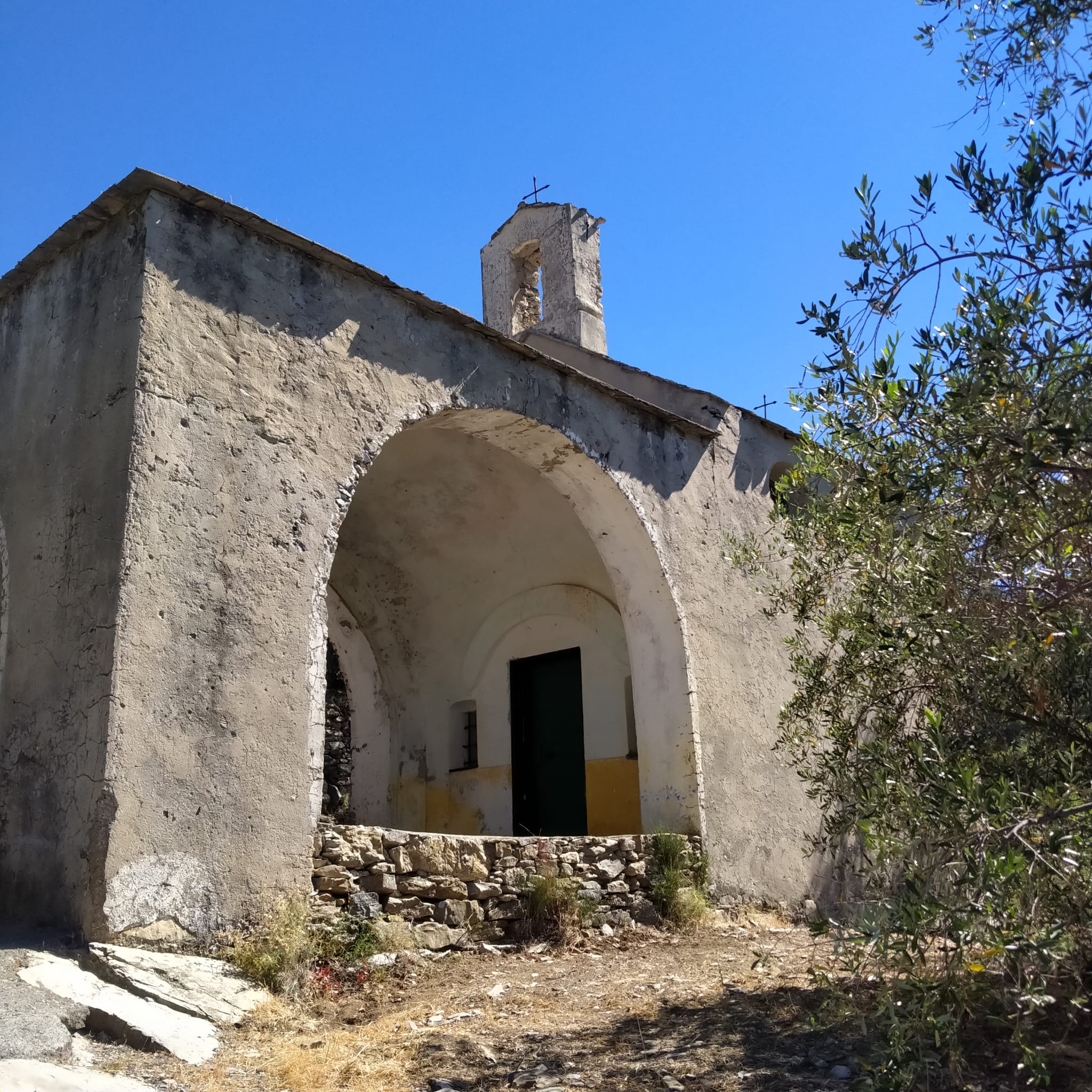
Saint Anthony of Padua has always been very loved and venerated in the Steria Valley, as shown by the fact that many churches and chapels have depictions or dedications to the Saint. The story of Saint Anthony tells that he was a great intercessor of God and is known for this as the "Saint of miracles". From Tovo Faraldi, there is a mule track dedicated to him, which once connected the village to San Bartolomeo al Mare: the mule track of Sant'Antunin. At the beginning of this road, there is a picnic area where one can pause and enjoy a good lunch surrounded by the tranquility of nature. As you descend the road, you come across a wooden cross, the only one remaining from an ancient religious path. Continuing the walk down the valley, you reach the Oratory of Sant'Antunin, whose chapel was built in the mid-seventeenth century as a sign of the population's devotion to the Saint. Originally, only the chapel part and a small bell tower were present, while over the centuries, a portico was added to provide shelter for the faithful and pilgrims. The interior of the building is well decorated and preserved, and even today, on June 13th of each year, a mass is celebrated in honor of the Saint.
F
Sant'Antunin path
I find Faraldi
1.2 km
128 m
F
00:40
Saint Anthony of Padua has always been very loved and venerated in the Steria Valley, as shown by the fact that many churches and chapels have depictions or dedications to the Saint. The story of Saint Anthony tells that he was a great intercessor of God and is known for this as the "Saint of miracles". From Tovo Faraldi, there is a mule track dedicated to him, which once connected the village to San Bartolomeo al Mare: the mule track of Sant'Antunin. At the beginning of this road, there is a picnic area where one can pause and enjoy a good lunch surrounded by the tranquility of nature. As you descend the road, you come across a wooden cross, the only one remaining from an ancient religious path. Continuing the walk down the valley, you reach the Oratory of Sant'Antunin, whose chapel was built in the mid-seventeenth century as a sign of the population's devotion to the Saint. Originally, only the chapel part and a small bell tower were present, while over the centuries, a portico was added to provide shelter for the faithful and pilgrims. The interior of the building is well decorated and preserved, and even today, on June 13th of each year, a mass is celebrated in honor of the Saint.
F
Sant'Antunin path
I find Faraldi
1.2 km
128 m
F
00:40
Saint Anthony of Padua has always been very loved and venerated in the Steria Valley, as shown by the fact that many churches and chapels have depictions or dedications to the Saint. The story of Saint Anthony tells that he was a great intercessor of God and is known for this as the "Saint of miracles". From Tovo Faraldi, there is a mule track dedicated to him, which once connected the village to San Bartolomeo al Mare: the mule track of Sant'Antunin. At the beginning of this road, there is a picnic area where one can pause and enjoy a good lunch surrounded by the tranquility of nature. As you descend the road, you come across a wooden cross, the only one remaining from an ancient religious path. Continuing the walk down the valley, you reach the Oratory of Sant'Antunin, whose chapel was built in the mid-seventeenth century as a sign of the population's devotion to the Saint. Originally, only the chapel part and a small bell tower were present, while over the centuries, a portico was added to provide shelter for the faithful and pilgrims. The interior of the building is well decorated and preserved, and even today, on June 13th of each year, a mass is celebrated in honor of the Saint.
H
Sorbus ring
Riva Faraldi
3.2 km
210 m
F
01:15
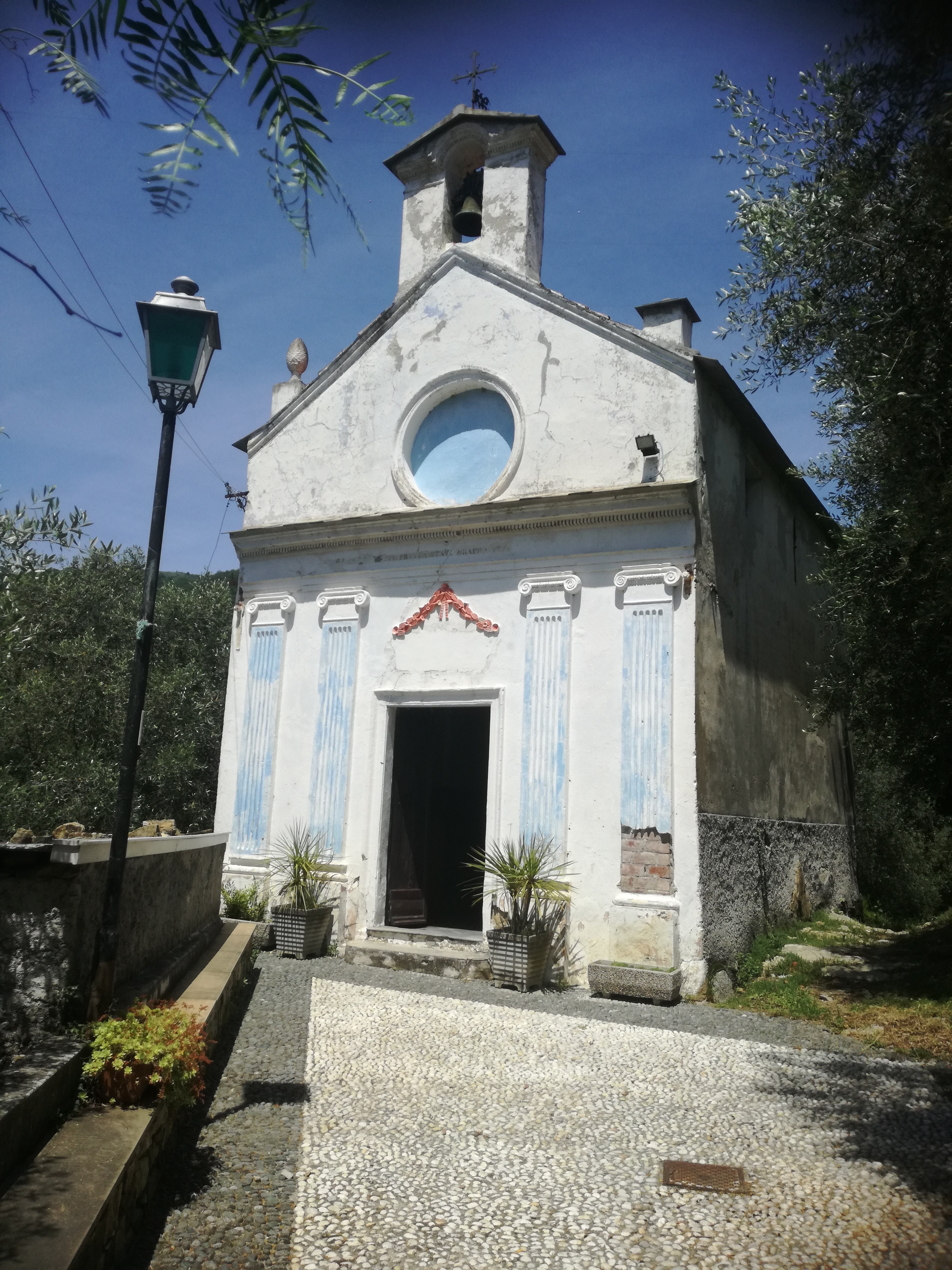
From the hamlet of Riva Faraldi starts an extremely interesting itinerary. Once you enter the village, you can visit the Chapel of San Rocco, which was built by the local population in the mid-1800s as a sign of gratitude for having been spared from the cholera pandemic. As you delve into the town, you come across the imposing Church of the Transfiguration, erected on the 16th-century foundations of San Salvatore. Riva Faraldi is characterized, as its name suggests, by the large amount of water that has allowed for the construction and development of the picturesque water-powered mills, or "gumbi," which utilized hydraulic power thanks to the use of large wooden wheels, some of which are still visible today. Crossing the river via the Roman bridge, you access the area called ina Sorba, after which this walk is named. Climbing along the path, you encounter the sailor's pillar, which legend says was built by a sailor-farmer who, feeling nostalgic for his land and wanting to glimpse it from the sea, made a fire for his wife, who, in this way, reminded him of her love. A little further ahead is an extremely rare construction: a dry-stone shelter on two floors, a temporary refuge for farmers above, and for livestock on the lower floor. Continuing and crossing the river, you return to Riva Faraldi, where you can visit, just before entering the village, the Oratory of San Martino, erected at the end of the 1800s. Located among the olive trees, the building was constructed after the devastating earthquake of 1887, replacing the previous one dating back to the mid-1700s. With a single nave, very simple both outside and inside, it has a single altar in white stucco, and inside it houses the processional statue of San Martino in episcopal garments.
H
Sorbus ring
Riva Faraldi
3.2 km
210 m
F
01:15
From the hamlet of Riva Faraldi starts an extremely interesting itinerary. Once you enter the village, you can visit the Chapel of San Rocco, which was built by the local population in the mid-1800s as a sign of gratitude for having been spared from the cholera pandemic. As you delve into the town, you come across the imposing Church of the Transfiguration, erected on the 16th-century foundations of San Salvatore. Riva Faraldi is characterized, as its name suggests, by the large amount of water that has allowed for the construction and development of the picturesque water-powered mills, or "gumbi," which utilized hydraulic power thanks to the use of large wooden wheels, some of which are still visible today. Crossing the river via the Roman bridge, you access the area called ina Sorba, after which this walk is named. Climbing along the path, you encounter the sailor's pillar, which legend says was built by a sailor-farmer who, feeling nostalgic for his land and wanting to glimpse it from the sea, made a fire for his wife, who, in this way, reminded him of her love. A little further ahead is an extremely rare construction: a dry-stone shelter on two floors, a temporary refuge for farmers above, and for livestock on the lower floor. Continuing and crossing the river, you return to Riva Faraldi, where you can visit, just before entering the village, the Oratory of San Martino, erected at the end of the 1800s. Located among the olive trees, the building was constructed after the devastating earthquake of 1887, replacing the previous one dating back to the mid-1700s. With a single nave, very simple both outside and inside, it has a single altar in white stucco, and inside it houses the processional statue of San Martino in episcopal garments.
H
Sorbus ring
Riva Faraldi
3.2 km
210 m
F
01:15
From the hamlet of Riva Faraldi starts an extremely interesting itinerary. Once you enter the village, you can visit the Chapel of San Rocco, which was built by the local population in the mid-1800s as a sign of gratitude for having been spared from the cholera pandemic. As you delve into the town, you come across the imposing Church of the Transfiguration, erected on the 16th-century foundations of San Salvatore. Riva Faraldi is characterized, as its name suggests, by the large amount of water that has allowed for the construction and development of the picturesque water-powered mills, or "gumbi," which utilized hydraulic power thanks to the use of large wooden wheels, some of which are still visible today. Crossing the river via the Roman bridge, you access the area called ina Sorba, after which this walk is named. Climbing along the path, you encounter the sailor's pillar, which legend says was built by a sailor-farmer who, feeling nostalgic for his land and wanting to glimpse it from the sea, made a fire for his wife, who, in this way, reminded him of her love. A little further ahead is an extremely rare construction: a dry-stone shelter on two floors, a temporary refuge for farmers above, and for livestock on the lower floor. Continuing and crossing the river, you return to Riva Faraldi, where you can visit, just before entering the village, the Oratory of San Martino, erected at the end of the 1800s. Located among the olive trees, the building was constructed after the devastating earthquake of 1887, replacing the previous one dating back to the mid-1700s. With a single nave, very simple both outside and inside, it has a single altar in white stucco, and inside it houses the processional statue of San Martino in episcopal garments.
G
The street of gumbi
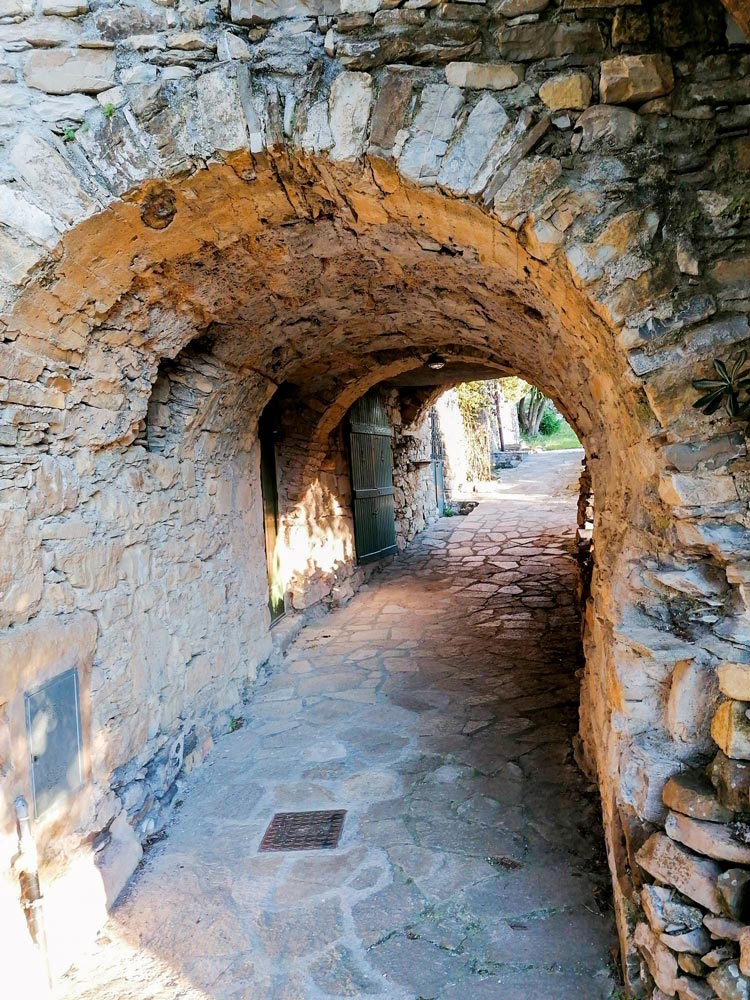
The element that will surprise us when visiting the Steria Valley is the vastness of the olive groves; the olive trees, with their grayish shades, blanket the entire landscape making it unique and special. The Via dei Gumbi crosses this world where one can feel the labor of man but also its fruit: oil. Starting from Riva Faraldi, one plunges into that farming world where, a few centuries ago, olive oil production was at the peak of the economy. The village is rich in ancient olive mills that are referred to in dialect as 'gumbo'; dozens can be admired along the route with their characteristic wheels called 'roasse'. It is thrilling to walk among the olive groves and then suddenly encounter the picturesque villages of Deglio Faraldi and Villa Faraldi, rich in monuments and places of artistic and cultural interest. Continuing the journey towards Tovetto, one can observe not only the ancient mills but also chapels and the typical shelters where farmers found refuge during their activities. The trip concludes at Tovo Faraldi where, in addition to the local beauties, there is U Gumbu de Nuccio, the interesting oil museum, which provides a clear example of how an ancient mill worked for the production of extra virgin olive oil.
G
The street of gumbi
The element that will surprise us when visiting the Steria Valley is the vastness of the olive groves; the olive trees, with their grayish shades, blanket the entire landscape making it unique and special. The Via dei Gumbi crosses this world where one can feel the labor of man but also its fruit: oil. Starting from Riva Faraldi, one plunges into that farming world where, a few centuries ago, olive oil production was at the peak of the economy. The village is rich in ancient olive mills that are referred to in dialect as 'gumbo'; dozens can be admired along the route with their characteristic wheels called 'roasse'. It is thrilling to walk among the olive groves and then suddenly encounter the picturesque villages of Deglio Faraldi and Villa Faraldi, rich in monuments and places of artistic and cultural interest. Continuing the journey towards Tovetto, one can observe not only the ancient mills but also chapels and the typical shelters where farmers found refuge during their activities. The trip concludes at Tovo Faraldi where, in addition to the local beauties, there is U Gumbu de Nuccio, the interesting oil museum, which provides a clear example of how an ancient mill worked for the production of extra virgin olive oil.
A territory lives when its history continues to be told.
"